News
No-Code Token Issuance: Launch Without Developers
How no-code platforms let you launch compliant digital securities without developers, from investor onboarding to lifecycle management.

Alexandre Lehr
CEO
last updated on
Share
90% of Clients start with a free personal strategy
On this page
Contact Us
ONINO provides infrastructure for digital & tokenized financing to make your next financing a success.
Quick Takeaway
Early tokenization required custom smart contract development, blockchain deployment, and months of build time. No-code issuance platforms eliminate that by providing managed infrastructure: structured templates for financial instruments, integrated KYC/AML, automated ownership registries, and built-in compliance workflows. Issuers interact with financial workflows, not blockchain code. The result is faster deployment, lower cost, and the ability to focus on deal structuring and investor relationships instead of technology development.
The process of issuing digital securities has historically required significant technical expertise. Early tokenization initiatives often involved custom smart contract development, blockchain infrastructure setup, and complex integrations with compliance systems. This created a barrier for many financial institutions, asset managers, and corporate issuers that wanted to explore digital securities but lacked the technical resources required to build the underlying infrastructure.
In recent years, a new category of financial technology platforms has emerged to address this challenge. No-code issuance platforms provide infrastructure that allows organizations to launch digital securities without developing blockchain systems internally. Instead of writing code, issuers interact with structured software tools that manage the technical and operational layers of digital issuance.
This shift is changing how digital securities can be deployed across private markets. By reducing technical complexity, no-code platforms enable financial operators to focus on structuring investment opportunities and connecting with investors.
The Technical Complexity of Early Token Issuance
The first generation of tokenization projects was often developer driven. Organizations interested in tokenizing assets needed to build technical infrastructure before they could launch investment opportunities.
Typical requirements included:
Smart contract development
Blockchain network deployment
Security audits
Integration with custody and wallet systems
Compliance verification mechanisms
This approach created several practical limitations.
Technical teams had to maintain complex codebases, manage blockchain upgrades, and ensure that financial logic was correctly implemented in smart contracts. At the same time, legal and regulatory requirements added additional layers of operational complexity.
As a result, many early tokenization initiatives required months of development before a single asset could be issued.
Why No-Code Issuance Platforms Emerged
The emergence of no-code platforms reflects a broader trend in financial technology. Instead of building infrastructure from scratch, organizations increasingly rely on specialized platforms that provide standardized operational systems.
In the context of digital securities, no-code platforms simplify the issuance process by abstracting the underlying blockchain infrastructure. The technical components are managed within the platform while users interact with a structured interface designed for financial workflows.
Key drivers behind this transition include:
Growing demand for digital financing infrastructure
Increasing interest in tokenized private market assets
The need for compliant issuance frameworks
The desire to reduce development costs and deployment time
By removing the requirement to build blockchain systems internally, no-code platforms allow organizations to launch digital securities more efficiently.
What a No-Code Digital Securities Platform Actually Does
Despite the name, no-code issuance platforms do more than simply create tokens. They provide infrastructure that supports the full lifecycle of digital securities.
This typically includes several operational components.
Digital Securities Issuance
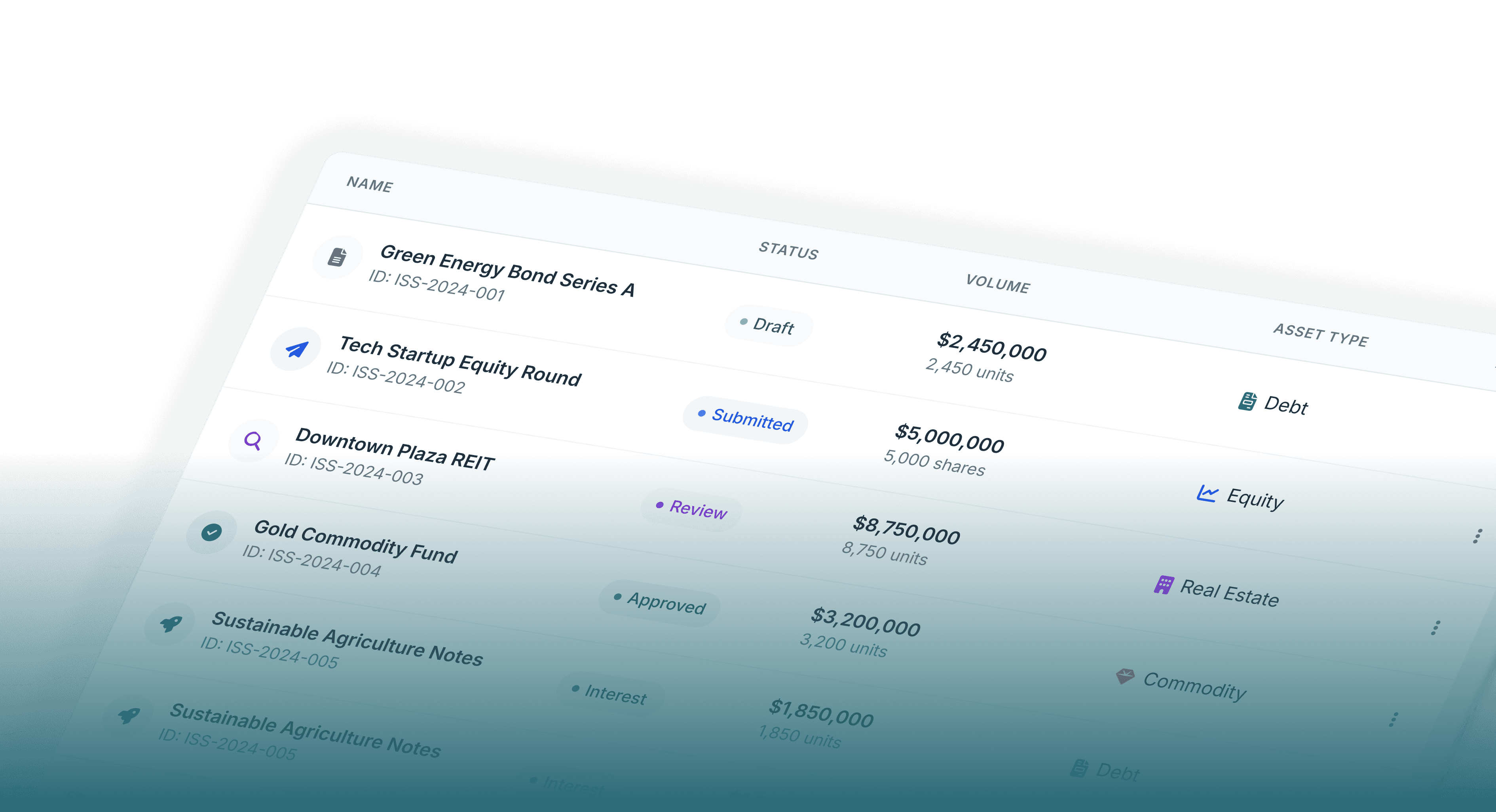
The platform enables issuers to structure and launch investment opportunities using standardized financial templates. These templates represent financial instruments such as equity, debt, or revenue participation structures.
Investor Onboarding
Platforms provide tools for investor registration, identity verification, and eligibility checks. This ensures that investment opportunities remain compliant with applicable regulations.
Ownership Management
Digital securities platforms maintain registries that track investor ownership and transaction history. These registries can update automatically when investors subscribe to or transfer securities.
Compliance Workflows
Regulatory compliance is integrated into the issuance process. Platforms can enforce rules related to investor eligibility, transfer restrictions, and reporting obligations.
Reporting and Communication
Issuers can manage investor communication, distribute reports, and provide transparency around asset performance through integrated dashboards.
Together these components form the operational infrastructure required for digital securities financing.
Comparing Traditional Issuance and No-Code Infrastructure
The difference between traditional token development and no-code issuance platforms can be illustrated by comparing their operational workflows.
Traditional token development:
Custom smart contract coding
Technical blockchain deployment
Manual compliance integration
Separate investor management systems
Long development timelines
No-code digital securities platforms:
Structured issuance templates
Managed blockchain infrastructure
Integrated compliance frameworks
Built-in investor onboarding tools
Faster platform deployment
This infrastructure model allows issuers to focus on financial structuring and investor relationships rather than technology development.
Advantages for Issuers and Financial Operators
No-code issuance platforms provide several practical benefits for organizations exploring digital securities.
Reduced technical complexity: Issuers do not need to develop blockchain systems or manage smart contracts directly. The platform handles these components internally.
Faster platform deployment: Digital securities platforms can be deployed significantly faster than custom-built tokenization systems.
Integrated compliance infrastructure: Platforms incorporate regulatory requirements into their workflows, reducing the operational burden of compliance management.
Improved investor management: Integrated onboarding and reporting tools simplify investor administration and communication.
Scalable infrastructure: Once deployed, platforms can support multiple investment opportunities across different asset classes.
These benefits explain why financial institutions, asset managers, and investment platforms are increasingly exploring no-code issuance infrastructure.
Market Outlook for No-Code Issuance Platforms
The development of no-code platforms reflects a broader shift in how financial infrastructure is delivered. Instead of building proprietary systems, organizations increasingly rely on specialized platforms that provide standardized financing capabilities.
Several sectors are particularly interested in this model.
Real estate investment platforms are exploring digital securities as a way to structure property investments with multiple investors.
Private equity operators are investigating digital issuance frameworks to manage fund participation and investor reporting.
Infrastructure financing initiatives are evaluating digital securities as a mechanism for structuring long-term investment projects.
As these sectors continue to digitize their operations, demand for accessible issuance infrastructure may increase.
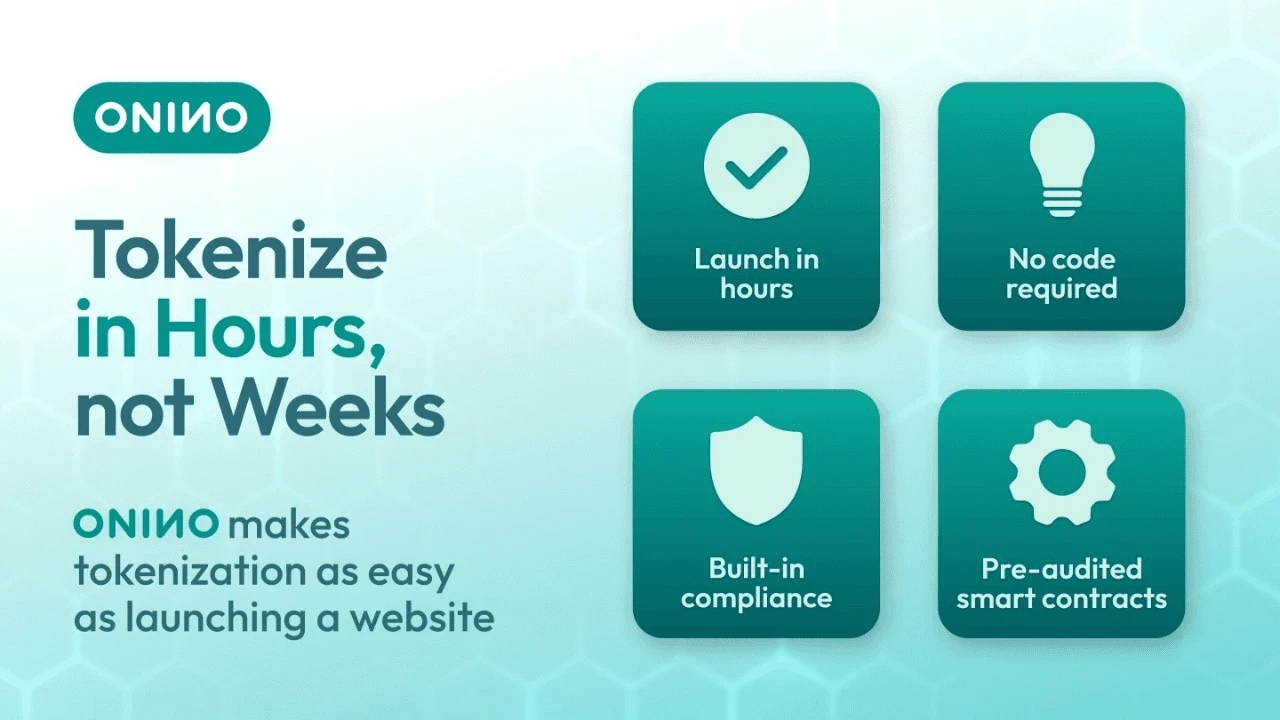
ONINO's infrastructure handles compliance, investor onboarding, and reporting from day one - so you can focus on structuring your deal and building your investor base. Platforms go live in under 24 hours, with no internal technical build required.
FAQ
What is a no-code token issuance platform?
A no-code token issuance platform allows organizations to create digital securities using software interfaces rather than custom code. The platform manages the underlying technical infrastructure required for issuance.
How does no-code digital securities issuance work?
Issuers use structured tools within a platform to define the financial instrument, onboard investors, and manage compliance requirements. The platform handles the technical implementation of the digital securities.
Are no-code tokenization platforms regulated?
The regulatory status depends on the jurisdiction and the structure of the financial instrument. Platforms typically incorporate compliance tools to help issuers meet regulatory requirements.
What types of assets can be issued using no-code platforms?
Assets such as real estate investments, private equity funds, infrastructure projects, and corporate debt instruments can be structured using digital securities platforms.
Do issuers need blockchain developers to use these platforms?
No-code platforms are designed to remove the need for direct blockchain development. Issuers interact with financial workflows rather than technical infrastructure.
Why are financial institutions interested in no-code issuance?
No-code platforms reduce development costs, simplify compliance workflows, and allow organizations to launch digital securities faster.
Summary
Digital securities issuance has evolved significantly from its early developer driven origins. While early tokenization projects required specialized blockchain development, modern platforms increasingly provide structured infrastructure that simplifies the issuance process.
No-code platforms represent an important step in the evolution of digital financing infrastructure. By integrating issuance workflows, compliance management, and investor administration into a single system, these platforms enable organizations to launch digital securities without building complex technology internally.
As financial markets continue to digitize, no-code issuance infrastructure may play an important role in enabling issuers to access capital from investors in more efficient and scalable ways.
General information only, accurate at the date shown. Not legal, tax or investment advice. Confirm your own position with qualified counsel.
Want to learn more how this can be applied to your business?
Read related Articles
How no-code platforms let you launch compliant digital securities without developers, from investor onboarding to lifecycle management.


