Insights
Digital Equity: How Companies Issue and Manage Equity Through Platforms
Tokenized equity explained: what it is, how to issue it under MiCAR/eWpG, who uses it (private equity, family offices, scale-ups), and platform options.

Alexandre Lehr
CEO
last updated on
Share
90% of Clients start with a free personal strategy
On this page
Contact Us
ONINO provides infrastructure for digital & tokenized financing to make your next financing a success.
Quick Takeaway
Digital equity issuance replaces the spreadsheet-and-email workflow of managing private placements with a regulated platform handling KYC, subscriptions, investor registers, and reporting in one system. In Germany and the EU, common instruments include Genussrechte (profit participation, no voting rights), Nachrangdarlehen (subordinated loans), and tokenized equity under the eWpG. Manual management breaks down past ~100 investors. The key distinction: cap table tools track ownership, regulated issuance platforms actually process financial instruments under securities law.
The phrase "digital equity" triggers different associations depending on who encounters it. For many, it still conjures images of blockchain tokens and cryptocurrency exchanges. In a regulated financial context, it means something more precise: the issuance and management of equity-like instruments through compliant digital infrastructure, under the same legal framework that governs traditional securities.
This article explains how digital equity issuance works in practice, what instrument types are relevant under German and EU law, and what role regulated platforms play in replacing the manual processes that make private equity management difficult to scale.
How Does a Company Issue Equity?
Equity issuance is the process by which a company raises capital by granting investors a claim on the company's assets, profits, or both. In a traditional context, this involves legal structuring, prospectus preparation, investor outreach, subscription processing, and ongoing investor register maintenance. For publicly listed companies, stock exchanges and central depositories handle much of this infrastructure. For private companies, most of it is done manually. The same registry principle applies to short-term receivables; see our guide to invoice tokenization.
A private company raising capital from 50 investors through a Genussrecht or Nachrangdarlehen structure typically manages subscriptions via email, tracks investor data in spreadsheets, issues certificates manually, and handles regulatory reporting through external legal counsel. This process is functional at small scale but breaks down as investor numbers grow or as multiple financing rounds run in parallel.
Digital equity issuance replaces this workflow with a platform that handles structuring support, investor onboarding, KYC/AML checks, subscription processing, register maintenance, and reporting within a single regulated system.
What Are Equity-Like Instruments Under German and EU Law?
Not all equity-like instruments carry the same legal character. In the German market, companies commonly raise capital through instruments that sit between pure equity and debt, each with distinct regulatory treatment.
Genussrechte (profit participation rights) grant investors a share of profits and, in some structures, a share of liquidation proceeds, without conferring voting rights. They are flexible instruments that can be tailored to specific return profiles and are widely used in German SME financing. Under the Electronic Securities Act (eWpG), Genussrechte can now be issued as electronic securities, removing the requirement for paper certificates.
Nachrangdarlehen (subordinated loans) are debt instruments where the lender's claim ranks below senior creditors in the event of insolvency. They carry fixed interest and a repayment obligation, but are treated as equity-like capital for accounting purposes. They are commonly used in real estate and project finance structures.
Tokenized equity in the strictest sense refers to digital representations of equity claims that carry full shareholder rights. Under the eWpG framework and the EU's DLT Pilot Regime, certain equity instruments can now be issued and settled in digital form, though the regulatory requirements are more demanding than for Genussrechte or Nachrangdarlehen.
The distinction between these instrument types matters because each carries different investor rights, regulatory obligations, and operational requirements. A platform built for Genussrecht issuance will have different compliance workflows than one designed for tokenized equity with full shareholder rights.
Where Traditional Equity Management Breaks Down
The operational complexity of managing equity or equity-like instruments increases non-linearly with the number of investors. At 10 investors, a spreadsheet is adequate. At 100, it becomes error-prone. At 500, it is a compliance liability.
Common failure points in manual equity management include investor register errors that create disputes over ownership, KYC documentation gaps that create regulatory exposure, inability to process secondary transfers efficiently, and fragmented communication histories that make investor relations difficult to manage.
For companies running multiple financing instruments in parallel, the problem compounds. Each instrument may have different interest payment dates, different investor eligibility criteria, and different reporting obligations. Without centralised infrastructure, these requirements consume significant management bandwidth and create coordination risk.
What Is an Equity Management Platform?
An equity management platform is software infrastructure that centralises the operational and compliance workflows associated with issuing and managing equity or equity-like instruments. In a regulated context, this means the platform must be capable of handling regulated financial instruments, which imposes requirements around data integrity, audit trails, KYC/AML compliance, and regulatory reporting.
There is an important distinction between cap table management tools, which are common in the startup ecosystem and designed primarily for tracking ownership stakes among a small number of shareholders, and regulated issuance platforms, which are authorised to process financial instruments subject to securities law.
ONINO operates in the second category. The platform is designed to handle the full lifecycle of a regulated digital security from issuance to investor exit, including the compliance infrastructure that separates a regulated platform from a simple register.
How Digital Platforms Change the Issuance Process
When a company issues a Genussrecht or similar instrument through a regulated digital platform, the operational process changes substantially compared to a manual issuance.
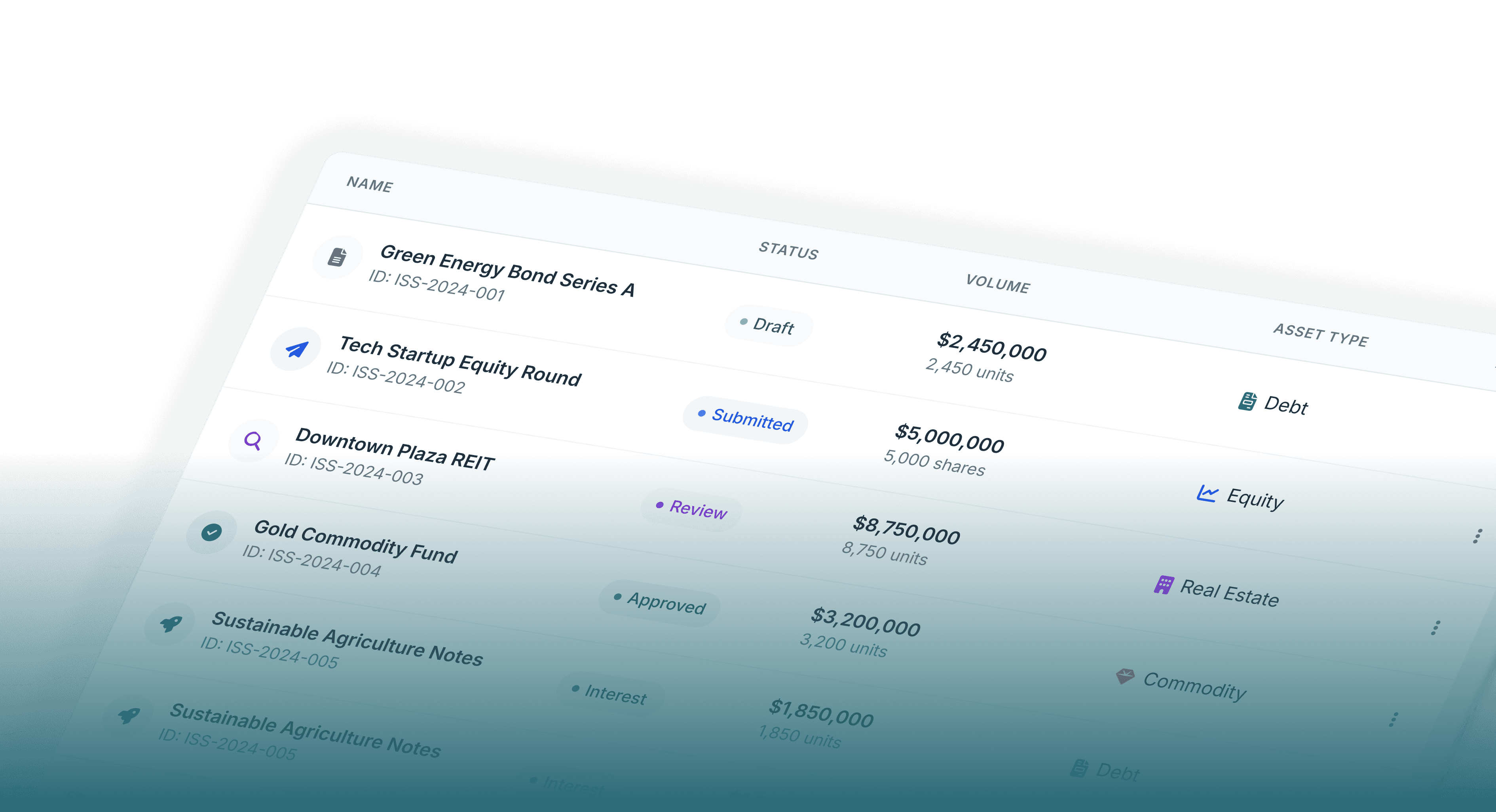
The investor onboarding process is handled digitally: investors complete KYC verification and suitability checks through the platform's workflow rather than submitting documents by email. The subscription process is automated: investors receive, sign, and submit subscription agreements through the platform, with each step recorded in an audit trail. The investor register is maintained in real time by the platform, removing the risk of manual entry errors.
For the issuer, this reduces the administrative burden of a capital raise significantly. For investors, it provides a consistent and documented experience. For regulators, the platform's audit trail provides the documentation basis required under applicable securities law.
Platforms like ONINO also support secondary market functionality, allowing investors to transfer holdings in compliant circumstances. This is a meaningful improvement over paper-based instruments, where secondary transfers require manual re-registration and often involve legal fees disproportionate to the transaction size.
How ONINO Supports Digital Equity Issuance
ONINO provides the regulated infrastructure layer for companies and financial institutions issuing digital securities in Europe. The platform supports Genussrechte, Nachrangdarlehen, and other equity-like instruments structured under German and EU law, and handles the compliance and operational workflows associated with each.
For financial institutions, the white-label model allows banks and investment firms to offer digital equity products to their clients under their own brand, with ONINO providing the underlying technology and regulatory infrastructure. This is the model used by Volksbank, which operates a live digital securities platform built on ONINO's infrastructure.
For companies raising capital directly, ONINO provides the issuance infrastructure, investor management tools, and compliance workflows needed to run a regulated capital raise without building that infrastructure internally.
ONINO's infrastructure handles compliance, investor onboarding, and reporting from day one — so you can focus on structuring your deal and building your investor base. Platforms go live in under 24 hours, with no internal technical build required.
Further reading: scaling co-investment operations
FAQ
What is the difference between tokenized equity and a Genussrecht?
Tokenized equity in the strict sense refers to a digital representation of an equity stake that carries full shareholder rights, including voting and dividend entitlements. A Genussrecht is a profit participation right that grants economic benefits without conferring ownership or voting rights. Both can be issued digitally, but they carry different legal characteristics and regulatory requirements. Genussrechte are widely used in German SME financing because of their structural flexibility and lower regulatory burden compared to full equity instruments.
Can a Nachrangdarlehen be issued digitally?
Yes. A Nachrangdarlehen is a contractual instrument rather than a security in the traditional sense, which means it can be documented and managed digitally without necessarily requiring the full securities issuance framework. Platforms like ONINO can handle the subscription, investor onboarding, and register management for Nachrangdarlehen alongside other instrument types.
What is the eWpG and why does it matter for digital equity?
The Electronic Securities Act (eWpG) came into force in Germany in 2021. It created the legal basis for issuing certain securities in electronic form without paper certificates. For issuers, this removed a significant operational barrier to digital issuance. For platforms, it established the regulatory framework within which electronic securities can be issued, transferred, and managed. The eWpG covers bearer bonds and fund units, with equity instruments subject to ongoing legislative development.
How does KYC work on a digital equity platform?
On a regulated digital equity platform, KYC is integrated into the investor onboarding workflow. Investors provide identity documentation and undergo automated or semi-automated verification as part of signing up to participate in an issuance. The platform records the outcome of each check, maintains the documentation, and flags cases requiring manual review. This replaces the email-and-spreadsheet approach common in manual private placements.
What happens to investor records if a company changes platforms?
This depends on the contractual arrangements between the issuer and the platform provider, and on the format in which investor data is stored. Well-structured platforms maintain investor registers in exportable formats and provide data portability provisions in their service agreements. Issuers evaluating platforms should treat data portability and register integrity as core requirements, particularly for instruments with long holding periods.
Is digital equity issuance suitable for early-stage companies?
It depends on the instrument type and investor base. For early-stage companies raising from a small number of institutional investors, the overhead of a regulated digital platform may not be justified. For growth-stage and established SMEs raising from a larger number of retail or semi-professional investors, the operational benefits of a digital platform become significant once investor numbers exceed the point where manual management is practical.
Summary
Digital equity issuance is not a crypto concept. It is the application of regulated digital infrastructure to the process of issuing and managing equity and equity-like instruments under securities law. In the German and EU context, this includes instruments like Genussrechte and Nachrangdarlehen, which have well-established legal frameworks and are widely used in private markets financing.
The core problem that digital platforms solve is operational: manual equity management is error-prone, difficult to audit, and does not scale with investor numbers. Regulated platforms replace the spreadsheet-and-email workflow with a compliant, auditable system that handles investor onboarding, subscription processing, register maintenance, and reporting in one place.
The distinction between cap table tools and regulated issuance platforms matters for companies that need to issue financial instruments subject to securities law. Only platforms operating within the applicable regulatory framework can handle instruments that carry investor rights and regulatory obligations.
ONINO provides this infrastructure for European issuers and financial institutions, supporting the full lifecycle of digital securities from initial issuance through secondary market transfers and investor exit. For companies and institutions evaluating digital equity infrastructure, the starting point is understanding which instrument type fits their capital structure and investor base.
General information only, accurate at the date shown. Not legal, tax or investment advice. Confirm your own position with qualified counsel.
Want to learn more how this can be applied to your business?
Read related Articles
Tokenized equity explained: what it is, how to issue it under MiCAR/eWpG, who uses it (private equity, family offices, scale-ups), and platform options.