Regulation
Digital Equity for Startups: How to Raise Capital Through Regulated Securities
How EU startups raise capital through regulated digital equity offerings. Covers MiFID II, Prospectus Regulation, ECSPR thresholds & the mechanics of security token offerings.

Lukas Wipf
CPO & Co-Founder
Lukas Wipf
CPO & Co-Founder
Share
Contact Us
ONINO provides infrastructure for regulated tokenized financing across the EU and Switzerland.
On this page
Quick Takeaway
Digital equity is not crypto. It's conventional shares recorded on a regulated digital register instead of paper certificates, with smart contracts handling cap table updates, distributions, and transfers. Most startup raises fall below the EUR 8M prospectus threshold, qualifying for simplified disclosure or full exemption. The EU Crowdfunding Regulation (ECSPR) enables cross-border equity raises up to EUR 5M through a single passported licence. Founders need legal structuring and investor documentation before anything else.
Digital Equity for Startups: How to Raise Capital Through Regulated Securities
The process of issuing company shares has not fundamentally changed in decades. Startups still rely on shareholder agreements, cap table spreadsheets, and legal processes designed for paper certificates. Digital equity changes the underlying infrastructure, not the legal structure. A startup issuing equity through a regulated digital securities platform is still issuing shares. The difference is that those shares are recorded on a blockchain register, managed through smart contracts, and distributed to investors through a compliant onboarding process.
Digital Equity vs. Traditional Shares: What Actually Changes
A digital equity token represents the same legal claim as a conventional share: ownership in a company, entitlement to dividends where applicable, and voting rights where the instrument confers them. What changes is the operational layer. Instead of a paper certificate or a spreadsheet entry at a law firm, the ownership record lives in a regulated digital register. Transfers are processed through smart contracts rather than manual registry updates, and investor onboarding follows a structured KYC/AML workflow embedded in the issuance platform.
This distinction matters because it is frequently misunderstood. Digital equity is not a crypto product. It is not an ICO and it carries none of the regulatory ambiguity that surrounds utility tokens or exchange-listed cryptocurrencies. A digital equity instrument issued under EU securities law is a financial instrument for all regulatory purposes, governed by the same rules as any other security.
The practical advantages for founders are procedural rather than structural. Cap table updates happen automatically when tokens transfer. Investor distributions can be programmed directly into the smart contract. Secondary market liquidity, where it exists, is handled through compliant venues rather than manual share transfer agreements. The legal rights attached to the shares remain unchanged throughout.
The Regulatory Framework: MiFID II, Prospectus Regulation and the EU Crowdfunding Regulation
Three regulatory instruments determine how a startup can issue digital equity in the EU.
MiFID II classifies securities tokens as financial instruments, which means any platform facilitating their issuance or trading must operate under appropriate authorization. This is why the choice of infrastructure provider matters: an unregulated issuance platform creates regulatory exposure for the issuer.
The EU Prospectus Regulation determines when a formal prospectus is required. For offers below EUR 1 million within a 12-month period, member states may grant a full exemption. For offers between EUR 1 million and EUR 8 million, a simplified disclosure document is sufficient in most jurisdictions. Only above EUR 8 million does a full BaFin-approved or equivalent prospectus become mandatory. This threshold structure means that most early-stage startup raises fall within the simplified or exempt category, significantly reducing legal overhead.
The EU Crowdfunding Regulation (ECSPR), in force since 2021, created a specific framework for investment-based crowdfunding up to EUR 5 million. Platforms operating under this regulation can facilitate equity and debt offerings to retail and professional investors across the EU under a single passported license. For startups, this means access to a cross-border investor base through a single regulated channel.
How a Security Token Offering Works in Practice
A Security Token Offering (STO) is the formal process by which a company issues regulated digital equity to investors. The term describes the mechanics of the offer, not a separate asset class. The underlying instrument is a security; the token is simply the form it takes.
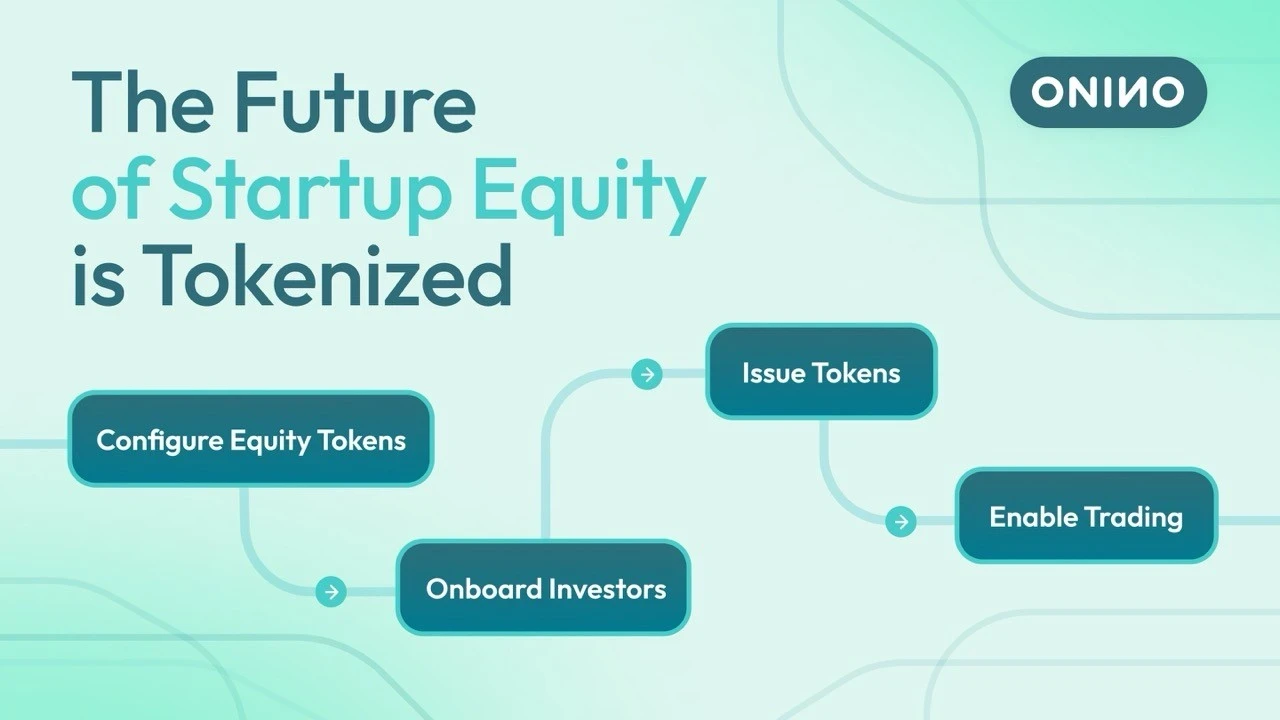
The process follows a defined sequence. First, the legal structure of the instrument is established: what rights does the token confer, under which jurisdiction, and under which exemption or prospectus requirement. Second, the token is designed and deployed on the issuance platform. Third, investors are onboarded through KYC/AML verification and whitelisted on the smart contract, ensuring only eligible investors can hold the instrument. Fourth, the offering is opened, subscriptions are collected, and tokens are distributed. Post-issuance, the platform handles cap table management, corporate actions, and any secondary market activity.
ONINO's platform handles the technical and compliance infrastructure across this entire sequence. Founders do not need to source a separate KYC provider, a smart contract developer, and a compliance consultant independently. The platform provides the regulated issuance environment, the investor onboarding workflow, and the post-issuance management tools in a single integrated stack.
What Founders Need to Prepare Before Issuing Digital Equity
Legal structuring is the first and most consequential step. This means deciding on the instrument type (ordinary shares, preferred equity, profit participation rights), the applicable exemption or prospectus requirement, and the investor eligibility criteria. This work is done with a securities lawyer and determines the compliance framework for the entire offering.
Investor documentation follows from the legal structure. Depending on the offering size and the applicable framework, this will include an information memorandum, a key investment information sheet (KIIS) under the Crowdfunding Regulation, or a full prospectus.
Investor readiness is the third element. Digital equity raises attract a different investor profile than traditional venture rounds. Understanding the secondary market conditions, the lock-up periods, and the reporting obligations that come with a regulated offering helps founders set realistic expectations with their investor base.
ONINO's infrastructure handles compliance, investor onboarding, and reporting from day one - so you can focus on structuring your deal and building your investor base. Platforms go live in under 24 hours, with no internal technical build required.
FAQ
What is the difference between an STO and an ICO?
A Security Token Offering issues regulated financial instruments governed by EU securities law, with mandatory KYC/AML, investor eligibility requirements, and prospectus obligations depending on offering size. An Initial Coin Offering issues utility or governance tokens that are not classified as financial instruments and operate outside the securities regulatory framework. The two are legally distinct.
What EU regulations apply to digital equity issuances?
The primary frameworks are MiFID II, the EU Prospectus Regulation, and the EU Crowdfunding Regulation (ECSPR) for offers up to EUR 5 million through licensed platforms. Member state laws such as Germany's eWpG add jurisdiction-specific requirements on top.
Do startups need a prospectus to issue digital equity?
Not necessarily. Offers below EUR 1 million per year are typically exempt. Offers between EUR 1 million and EUR 8 million qualify for a simplified disclosure regime. Only raises above EUR 8 million require a full prospectus approved by the relevant national regulator.
Can retail investors participate in a digital equity offering?
Yes, subject to eligibility criteria. Under the EU Crowdfunding Regulation, retail investors can participate up to certain investment limits per project per year, with additional knowledge assessments required above certain thresholds.
Summary
Digital equity tokens are regulated financial instruments under EU law, distinct from crypto tokens or ICOs.
Prospectus Regulation exemptions apply below EUR 1 million; simplified disclosure applies between EUR 1 million and EUR 8 million.
The EU Crowdfunding Regulation (ECSPR) enables cross-border equity raises up to EUR 5 million through a single passported license.
An STO is a process for issuing regulated digital equity, not a separate asset class.
Founders need legal structuring, investor documentation, and a regulated infrastructure platform before launching.
Want to learn more how this can be applied to your business?
Read related Articles
How EU startups raise capital through regulated digital equity offerings. Covers MiFID II, Prospectus Regulation, ECSPR thresholds & the mechanics of security token offerings.