News
The Smartest Way to Invest in European Companies - Introducing the ONINO Platform
How digital investment platforms expand access to European SMEs and private market opportunities. Why real-economy exposure through tokenized securities appeals to modern investors.

Kristina Stark
Junior Growth Manager
Kristina Stark
Junior Growth Manager
Share
Contact Us
ONINO provides infrastructure for regulated tokenized financing across the EU and Switzerland.
On this page
Quick Takeaway
European SMEs drive most of the continent's economic activity but sit in a funding gap between bank lending and venture capital, leaving investors with limited access. Digital financing platforms bridge this by structuring private market opportunities with standardized documentation, compliance workflows, and transparent investor dashboards. Tokenization works as the underlying infrastructure but is abstracted so investors interact through familiar interfaces, not blockchain systems directly.
The Smartest Way to Invest in European Companies
Investors looking for exposure to European markets typically rely on public equities, investment funds, or exchange traded funds. These instruments provide access to large publicly listed companies across the continent. However, they represent only a small portion of the European economy.
A significant share of economic activity in Europe comes from small and medium sized enterprises. These companies operate across industries such as manufacturing, technology, energy, and infrastructure. Despite their economic importance, many investors have historically had limited access to opportunities within this segment.
Traditional financing structures often place these businesses between two extremes. On one side, bank lending provides debt financing but usually requires collateral and strict conditions. On the other side, venture capital focuses mainly on high growth startups rather than established operating companies.
This creates a funding gap. Many viable businesses struggle to access growth capital, while investors have limited visibility into opportunities within this segment. New digital financing platforms aim to address this imbalance by structuring investment opportunities in a more transparent and accessible way.
Why European SMEs Matter
Small and medium sized enterprises represent the backbone of the European economy. They contribute a substantial share of employment and economic output across the region.
Key characteristics of the SME sector include:
millions of operating companies across Europe
strong presence in regional industries
stable businesses with established revenue streams
frequent demand for growth or expansion financing
Despite this importance, capital access remains uneven. Many companies rely heavily on bank lending, which may not always align with long term growth needs.
At the same time, investors interested in supporting real economy businesses often find it difficult to access these opportunities through traditional financial markets.
Traditional Ways to Invest in European Companies
Most investors gain exposure to European markets through publicly traded instruments. While these provide liquidity and diversification, they primarily represent larger corporations already listed on exchanges.
Common approaches include:
investing in European stock markets
purchasing regional exchange traded funds
participating in investment trusts or mutual funds
These vehicles offer exposure to companies that are already mature enough to be publicly listed.
Comparison of Investment Access
Investment Method | Typical Target Companies | Accessibility | Investor Participation |
|---|---|---|---|
Public Stocks | Large listed companies | High | Direct ownership through exchanges |
ETFs or Funds | Diversified portfolios | High | Indirect exposure |
Venture Capital | Early stage startups | Limited | Usually institutional investors |
SME Financing | Private operating companies | Historically limited | Emerging access via platforms |
This comparison highlights an important gap. The majority of investors can access large public companies but have limited options for participating in private company financing.
The SME Funding Gap
The SME funding gap refers to the space between traditional bank lending and venture capital financing.
Many companies operating within this gap have stable operations and clear growth plans but may not meet the requirements of conventional funding channels.
Common situations include:
businesses seeking expansion capital
companies financing equipment or infrastructure
organizations developing new projects within established industries
firms looking for alternative funding structures beyond traditional loans
At the same time, investors increasingly seek opportunities linked to real economic activity rather than purely speculative markets.
Bridging this gap requires infrastructure that connects issuers and investors while maintaining transparency and regulatory alignment.
Expanding Investor Access Through Digital Platforms
Digital financing platforms have emerged as a way to connect investors with previously hard to reach opportunities.
These platforms focus on structuring investment products digitally while standardizing documentation, compliance processes, and investor participation mechanisms.
Key advantages of digital financing platforms include:
improved transparency for investors
standardized investment documentation
standardized investor onboarding processes
improved visibility into investment opportunities
By organizing financing opportunities digitally, platforms can make it easier for investors to evaluate and participate in projects that were historically difficult to access.
How the ONINO Platform Expands Investment Access
The ONINO platform is designed to support the digital structuring and management of financing products linked to real economy assets.
Instead of requiring investors to interact with complex blockchain systems, the platform focuses on simplifying participation while maintaining compliance requirements.
Core characteristics include:
digital infrastructure for structuring financing products
standardized investor documentation and onboarding
compliance integrated into platform workflows
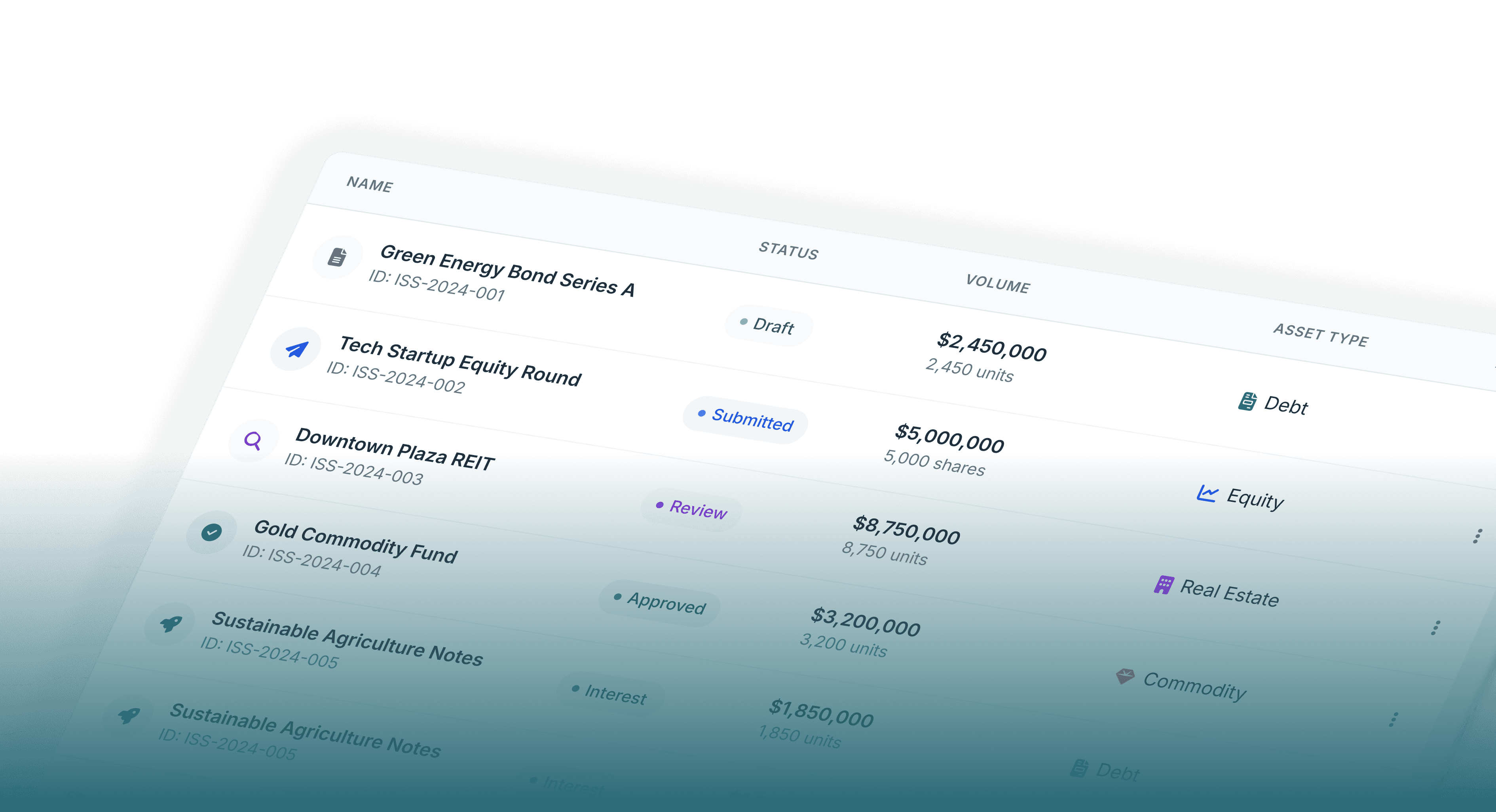
investor dashboards for tracking participation and performance
Tokenization technology may be used as the underlying infrastructure, but the platform abstracts most of the technical complexity so investors can interact through familiar interfaces.
Investment Platform Features for Investors
Digital investment platforms typically provide tools that help investors manage participation in financing opportunities.
Examples of these tools include:
portfolio overview dashboards
performance tracking tools
secondary marketplaces for eligible assets
referral systems that allow investors to introduce new participants
These features aim to make participation in private market opportunities more transparent and easier to manage.
Investment Platform Features for Issuers and Partners
Platforms also provide tools for companies and organizations that want to structure financing opportunities.
Common capabilities include:
administrative dashboards for managing investment offerings
documentation workflows for compliance and disclosures
investor management tools
reporting and analytics systems
These tools allow issuers to structure financing programs while maintaining oversight of investor participation.
Example Use Cases and Industries
Digital financing platforms can support a wide range of use cases across multiple industries.
Examples include:
financing for energy infrastructure projects
equipment leasing and asset finance
cooperative participation models
These use cases demonstrate how digital infrastructure can support different financing structures while maintaining standardized processes.
Summary
Investing in European companies has traditionally focused on publicly listed corporations and investment funds. While these markets provide liquidity and accessibility, they represent only part of the broader European economy.
Small and medium sized enterprises play a central role in economic activity but have historically been difficult for investors to access directly. At the same time, many of these businesses face challenges when seeking financing through traditional channels.
Digital financing platforms are emerging as a way to bridge this gap. By structuring investment opportunities digitally and standardizing processes for issuers and investors, these platforms expand access to private market opportunities.
As financial infrastructure continues to evolve, platforms that connect investors with real economy financing opportunities may play an increasingly important role in shaping the future of European investment markets.
ONINO's infrastructure handles compliance, investor onboarding, and reporting from day one - so you can focus on structuring your deal and building your investor base. Platforms go live in under 24 hours, with no internal technical build required.
FAQ
What are European SMEs?
European SMEs are small and medium sized enterprises operating across various industries. They represent a major share of employment and economic activity in Europe.
Why is it difficult to invest in private European companies?
Private companies are not publicly listed on stock exchanges, which makes access to investment opportunities limited for many investors.
What is the SME funding gap?
The SME funding gap refers to the financing space between traditional bank lending and venture capital where many companies struggle to access capital.
How do digital investment platforms work?
Digital platforms structure investment opportunities online, allowing investors to discover, evaluate, and participate in financing opportunities through standardized processes.
What role does tokenization play in investment platforms?
Tokenization can be used as underlying infrastructure to represent financial assets digitally, but many platforms simplify the user experience so investors do not need to interact with blockchain systems directly.
Are private market investments riskier than public stocks?
Private market investments often involve different risk profiles because they are linked to specific projects or companies rather than diversified public markets. Investors typically evaluate these opportunities carefully before participating.
Want to learn more how this can be applied to your business?
Read related Articles
How digital investment platforms expand access to European SMEs and private market opportunities. Why real-economy exposure through tokenized securities appeals to modern investors.