Business
From Gold to Art: Financing Real-World Assets with Digital Securities
From gold to fine art: how real-world assets are financed through digital securities. Practical examples covering commodities, property & collectibles on regulated platforms.

Alexandre Lehr
CEO
last updated on
Share
90% of Clients start with a free personal strategy
On this page
Contact Us
ONINO provides infrastructure for digital & tokenized financing to make your next financing a success.
Quick Takeaway
RWA tokenization, short for real-world asset tokenization, means issuing digital securities that represent ownership or revenue rights in a physical or off-chain asset, such as real estate, commodities, art or private company shares. The asset itself does not move onto a blockchain; the rights to it do, as regulated digital securities. Real-world assets (gold, real estate, art, infrastructure, private companies) are capital-intensive but traditionally only accessible to large institutional investors. Digital securities let issuers structure ownership or revenue rights in these assets and distribute them to a broader investor base through regulated platforms. The key shift isn't the token itself, it's the full infrastructure layer underneath: issuance, investor onboarding, ownership registries, compliance monitoring, and reporting. Digital securities complement traditional financing rather than replacing it.
Real estate, commodities, infrastructure projects, and valuable collectibles represent trillions in value and form the foundation of global economic activity. Traditionally, financing these assets requires complex capital market structures and large institutional investors.
In recent years, digital securities have emerged as a way to modernize how these assets can be financed. By representing ownership rights through digital infrastructure, issuers can connect assets with investors in new ways.
This development has attracted interest across many sectors, from commodity investment to private equity and infrastructure financing.
What Are Real-World Assets?
Real-world assets refer to physical or tangible assets that exist outside digital financial systems. These assets hold intrinsic economic value and are often used for investment, production, or long-term wealth preservation.
Common examples include:
precious metals such as gold and silver
real estate properties
works of art and collectibles
infrastructure projects
private company shares
commodities and natural resources
Many of these assets require capital to be developed, maintained, or expanded. Financing mechanisms allow investors to participate in the value generated by these assets.
Why Real-World Assets Require Financing
Most real-world assets are capital intensive. Building infrastructure, acquiring property, or developing natural resources requires significant investment.
Traditionally, this financing comes from banks, private equity funds, institutional investors, and venture capital firms.
However, traditional financing models often limit participation to a small number of large investors.
Digital securities infrastructure introduces alternative ways to structure these financing opportunities.
Examples of Real-World Assets Financed with Digital Securities
Digital securities can represent financial interests in many types of real-world assets.
Precious Metals
Assets such as gold can be structured into investment products that allow investors to participate in the value of stored physical reserves. See our guide to tokenized commodities.
Real Estate
Property developments and rental portfolios can raise capital by issuing digital securities that represent ownership or revenue participation.
Art and Collectibles
High-value artworks can be financed through structures that allow multiple investors to share exposure to the asset.
Infrastructure Projects
Large projects such as energy facilities, transportation networks, or renewable energy installations often require significant financing that can be structured through digital securities.
Private Companies
Startups and private businesses may use digital securities as an alternative method of raising growth capital.
Infrastructure Required for Financing Real-World Assets
Financing assets through digital securities requires more than simply creating tokens. A full infrastructure layer must manage investor participation and regulatory compliance.
Key infrastructure components include:
investor onboarding and verification systems
ownership registries that track investor participation
compliance monitoring systems
reporting and investor communication tools
These systems ensure that digital securities operate within established regulatory frameworks while providing transparency for investors.
Benefits of Digital Securities for Real-World Assets
Digital securities can offer several advantages for asset financing.
Improved capital access: Issuers may be able to connect with a broader investor base.
Operational efficiency: Digital infrastructure can simplify administrative processes associated with investor management.
Transparency: Ownership registries provide clearer tracking of investor participation.
Flexibility: Digital securities can be structured to represent various financial rights such as equity, debt, or revenue participation.
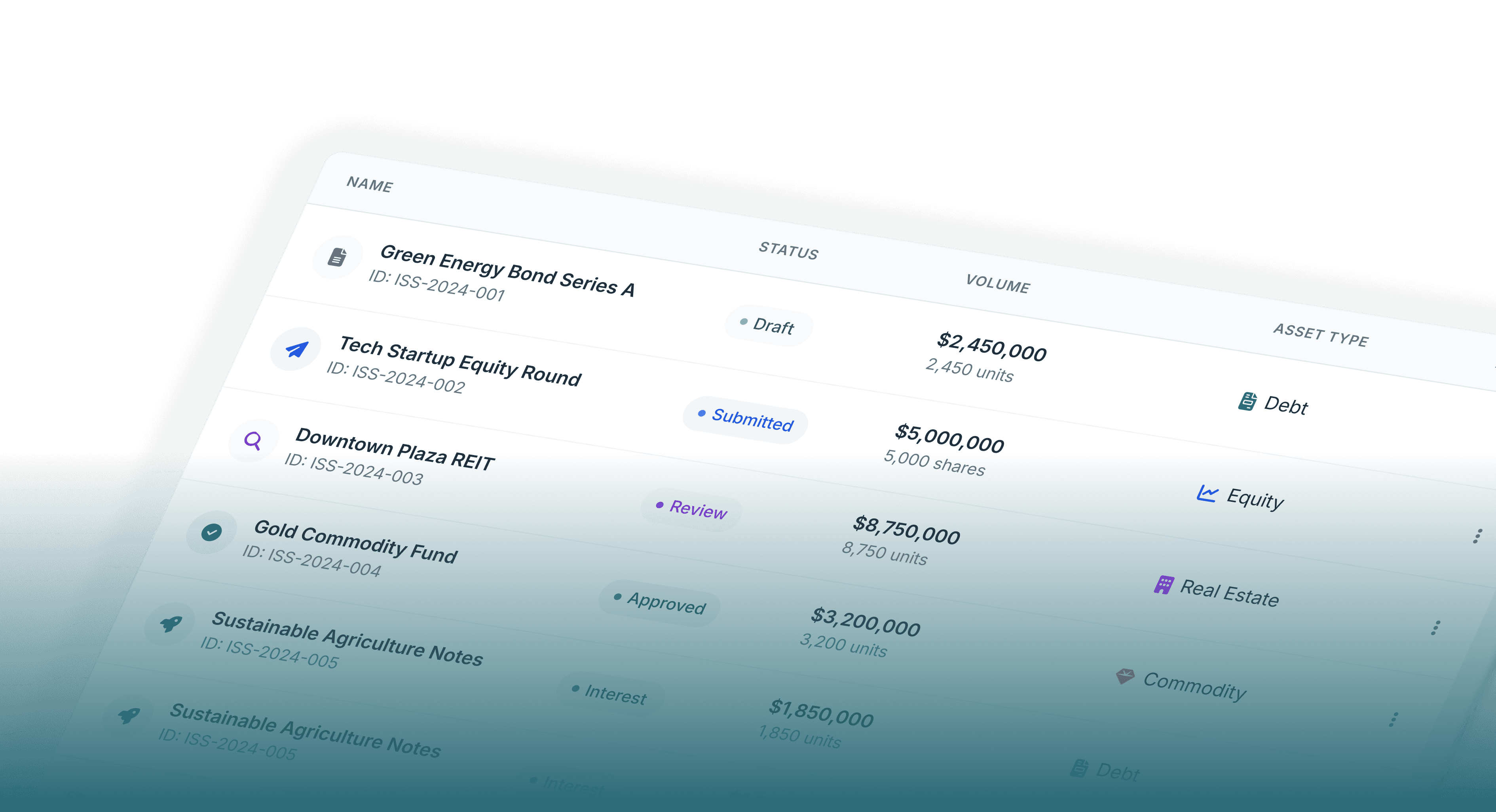
ONINO's infrastructure handles compliance, investor onboarding, and reporting from day one - so you can focus on structuring your deal and building your investor base. Platforms go live in under 24 hours, with no internal technical build required.
Further reading: how no-code token issuance works For the vendor side of this decision, see how to choose an RWA tokenization platform. An 8-factor checklist for EU issuers is also available.
FAQ
What is RWA tokenization?
RWA tokenization is the process of issuing digital securities that represent ownership or revenue rights in a real-world asset, so investors can gain exposure to it without owning it directly. The asset stays where it is; the rights to it are issued, administered and reported as digital securities under existing EU securities law.
What are real-world assets?
Real-world assets are tangible assets such as real estate, commodities, infrastructure, and artworks that have economic value outside digital financial systems.
How can real-world assets be financed with digital securities?
Issuers create financial instruments that represent ownership or revenue rights linked to the asset. These instruments are issued through digital securities platforms.
Are digital securities regulated?
In most jurisdictions digital securities fall under existing securities regulations. The regulatory requirements depend on the financial structure used.
What assets can be financed through digital securities?
Assets such as real estate developments, infrastructure projects, commodities, and private companies can all be structured using digital securities.
Why are investors interested in real-world assets?
Real-world assets often provide exposure to tangible value and can diversify investment portfolios.
Do digital securities replace traditional financing?
Digital securities typically complement existing capital market systems rather than replacing them entirely.
Summary
Real-world assets represent a significant portion of global wealth, yet financing these assets has traditionally relied on complex capital market structures. Digital securities infrastructure introduces new ways for issuers to structure investment opportunities linked to these assets.
From gold reserves to art collections and infrastructure projects, digital financing platforms allow asset owners to connect with investors through structured digital instruments. As financial infrastructure continues to evolve, digital securities may become an increasingly important mechanism for financing real-world assets across global markets.
General information only, accurate at the date shown. Not legal, tax or investment advice. Confirm your own position with qualified counsel.
Want to learn more how this can be applied to your business?
Read related Articles
From gold to fine art: how real-world assets are financed through digital securities. Practical examples covering commodities, property & collectibles on regulated platforms.


