Business
How SMEs Use Digital Platforms to Raise Capital: From Manual Fundraising to Scalable Infrastructure
How SMEs raise capital from multiple investors on a digital platform: step-by-step process, regulatory structure & how it differs from crowdfunding. Real cost comparison included.

Alexandre Lehr
CEO
Alexandre Lehr
CEO
Share
Contact Us
ONINO provides infrastructure for regulated tokenized financing across the EU and Switzerland.
On this page
Quick Takeaway
Digital financing platforms replace manual KYC, subscriptions, and registry management with a single automated system. The SME defines the offering terms and manages investor relationships; the platform handles everything operational. Unlike crowdfunding platforms, regulated digital securities infrastructure supports more complex instruments (Nachrangdarlehen, Genussrechte), professional/semi-professional investors, and larger offering sizes. The process follows four stages: instrument definition, platform setup, offering period, then closing and issuance.
How Do Small Businesses Raise Capital From Multiple Investors Using a Digital Platform?
A small or medium-sized business that needs to raise capital from more than a handful of investors faces an operational problem that traditional financing does not solve well. Managing 50 or 100 individual investors manually, each with their own subscription document, KYC file, and communication history, is expensive, slow, and error-prone. Digital financing platforms were built to solve exactly this problem: they standardize and automate the process of raising capital from a structured investor base, making it manageable at any scale.
Why Manual Fundraising Stops Working
Most SMEs that have raised capital before have done it the manual way: a small number of investors, bilateral negotiations, paper-based subscription agreements, and ongoing management via spreadsheet and email. This works at low investor counts. It breaks down quickly as the investor base grows.
The operational costs multiply with each new investor. A 20-investor raise with manual processes might require 40 to 60 hours of administrative work to close: KYC checks, document preparation, countersignatures, payment reconciliation, and registry updates. A 200-investor raise with the same processes does not take ten times as long; it takes closer to fifty, because the coordination complexity grows non-linearly. Communication errors, missed payments, and registry inconsistencies accumulate in ways that a spreadsheet cannot catch.
The second problem is investor access. Manual fundraising limits the SME to investors it can reach directly and manage individually. This typically means personal networks, local angel investors, or a small number of institutional contacts. A digital platform expands that reach to any investor who can onboard through the platform's portal, regardless of geography, without adding administrative complexity per investor.
What a Digital Financing Platform Actually Gives an SME
A digital financing platform provides the infrastructure for an SME to raise capital in a structured, compliant way from a defined investor base. The platform handles the operational layer: KYC verification, subscription processing, investor registry, payment collection, and post-issuance management. The SME focuses on the capital raise itself: defining the offering terms, engaging with investors, and managing the business the capital is meant to finance.
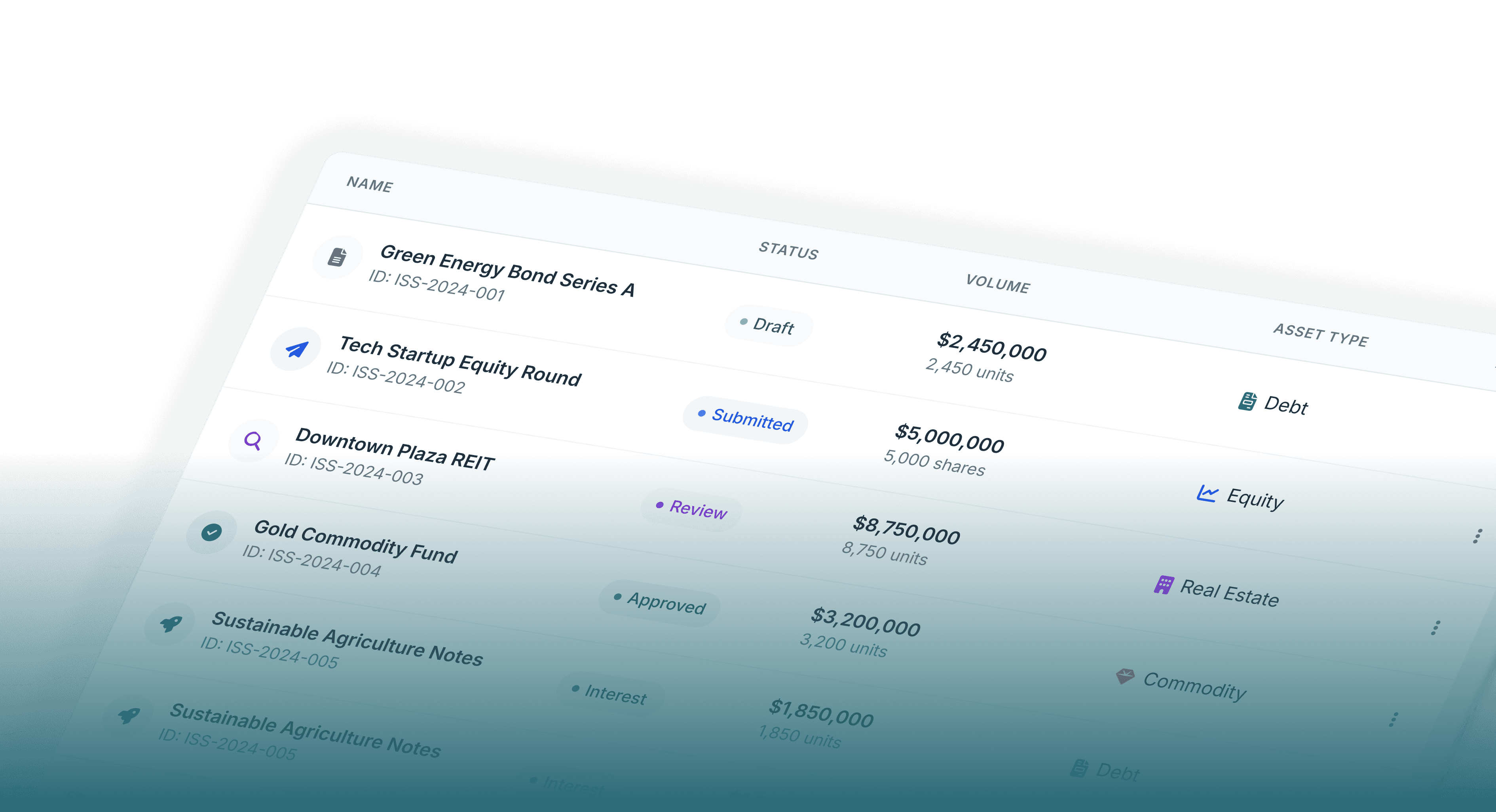
In practical terms, the platform replaces a series of manual processes with a single portal through which investors onboard, subscribe, and receive updates. An investor receives a link, completes the KYC and eligibility verification online, reviews the offering documentation, and submits their subscription through the portal. The platform records the subscription, processes the payment, issues the digital security to the investor's position, and updates the registry. The SME sees all of this in a dashboard rather than a spreadsheet.
Post-issuance, the platform manages distributions, investor reporting, and secondary transfers. When the SME pays interest or returns capital, the platform calculates each investor's entitlement and executes the payment. When an investor wants to transfer their position to a new investor, the platform manages the KYC verification of the incoming investor and the registry update. The SME approves each step; the platform executes it.
Crowdfunding vs Regulated Digital Securities: The Key Difference
Many SME owners first think of crowdfunding platforms like Crowdcube or Seedrs when they consider raising from multiple investors online. Crowdfunding platforms are suitable for specific use cases, but they are not the same as regulated digital securities infrastructure, and the distinction matters.
Crowdfunding platforms are designed for retail fundraising: large numbers of small investors, simple investment structures, and offering amounts typically below EUR 5 million per raise. The instruments are standardized, the process is consumer-grade, and the platform controls most of the investor relationship. For an SME raising a seed round from hundreds of retail investors, this model works well.
Regulated digital securities platforms are designed for more complex capital structures: larger minimum subscriptions, professional and semi-professional investors, instruments like Nachrangdarlehen or Genussrechte that crowdfunding platforms do not support, and offering amounts that can extend well above EUR 5 million with the appropriate prospectus documentation. The SME has more control over the investor relationship and the terms of the offering.
The right choice depends on the SME's capital structure needs, the investor base it wants to reach, and the offering size. For SMEs raising growth capital from a defined group of professional or high-net-worth investors using structured instruments, regulated digital securities infrastructure is the appropriate vehicle. For SMEs raising small amounts from a large retail audience, a crowdfunding platform may be the simpler path.
What the Capital Raising Process Looks Like on a Platform
An SME raising capital through a regulated digital securities platform follows a defined process from the initial decision to close.
The first step is instrument and structure definition. The SME, typically with legal counsel, decides what it is issuing: a Nachrangdarlehen with fixed interest, a profit participation right, a convertible note, or another instrument suited to its capital needs. This determines the regulatory path, the documentation requirements, and the investor eligibility criteria that the platform will enforce.
The second step is platform setup and offering configuration. The platform is configured with the SME's offering terms: instrument type, interest rate or return structure, minimum subscription, offering period, and target raise amount. Offering documentation, prepared with legal counsel, is uploaded to the platform and made available to investors during the offering period.
The third step is the offering period itself. Investors access the platform through the SME's configured portal, complete KYC and eligibility verification, review the offering documentation, and submit their subscriptions. The platform tracks subscription progress against the target in real time.
The fourth step is closing and issuance. Once the offering period ends and the minimum subscription threshold is met, the platform processes the final subscriptions, collects payments, issues the digital securities to all subscribers, and registers the positions in the investor registry. Ongoing management from that point runs through the platform: scheduled interest payments, investor reporting, and handling of transfer requests.
Ready to Launch?
ONINO's infrastructure handles compliance, investor onboarding, and reporting from day one - so you can focus on structuring your deal and building your investor base. Platforms go live in under 24 hours, with no internal technical build required.
FAQ
What allows businesses to raise money from many small investors online?
Regulated digital securities platforms and crowdfunding service providers authorized under the EU Crowdfunding Regulation (ECSPR) allow businesses to raise capital from multiple investors online. These platforms handle KYC verification, subscription processing, payment collection, and investor registry management that would otherwise need to be handled manually for each investor.
What is digital capital raising?
Digital capital raising refers to the process of issuing financial instruments and managing investor subscriptions through a digital platform rather than through manual, paper-based processes. For SMEs in the EU, this typically means issuing a Nachrangdarlehen, Genussrecht, or similar instrument through a regulated platform that handles KYC, subscription processing, and investor management digitally.
Does a digital financing platform take a percentage?
Platform fee structures vary. Most regulated digital securities platforms charge a combination of a setup fee, a monthly or annual platform fee, and a success fee calculated as a percentage of the amount raised. For context, the alternative to platform fees is the cost of managing the same capital raise manually, which for a raise with 50 or more investors typically exceeds the platform cost by a significant margin in staff time and legal fees alone.
How do I choose between crowdfunding and a regulated digital securities platform?
The main factors are offering size, investor type, and instrument complexity. Crowdfunding platforms under ECSPR are appropriate for offers up to EUR 5 million per year from retail investors using simple equity or debt instruments. Regulated digital securities platforms are more appropriate when the offering exceeds EUR 5 million, when the investor base consists primarily of professional or semi-professional investors, or when the instrument structure requires custom terms rather than standardized crowdfunding templates.
Summary
Digital financing platforms solve the operational problem of managing large numbers of investors by replacing manual KYC, subscription, and registry processes with a single automated portal.
The platform handles the infrastructure layer: onboarding, subscription processing, payments, registry, and post-issuance reporting; the SME manages the offering terms and investor relationships.
Regulated digital securities platforms differ from crowdfunding platforms in instrument complexity, investor type, offering size, and the degree of control the SME retains over the investor relationship.
The capital raising process follows four stages: instrument definition, platform setup, offering period, and closing and issuance.
For SMEs raising structured capital from professional or semi-professional investors using instruments like Nachrangdarlehen or Genussrechte, regulated digital securities infrastructure is the appropriate vehicle.
Want to learn more how this can be applied to your business?
Read related Articles
How SMEs raise capital from multiple investors on a digital platform: step-by-step process, regulatory structure & how it differs from crowdfunding. Real cost comparison included.