News
Why Banks Are Building Digital Financing Platforms: The Basel 3 Opportunity
How Basel 3 capital rules push regional banks toward digital financing platforms. Why Volksbanken & Sparkassen offer mezzanine capital without balance sheet exposure via tokenization.

Lukas Wipf
CPO & Co-Founder

Lukas Wipf
CPO & Co-Founder
Share
Contact Us
ONINO provides infrastructure for regulated tokenized financing across the EU and Switzerland.
On this page
Quick Takeaway
Basel 3.1 is forcing banks to hold more capital against SME loans, making traditional lending less efficient. Digital financing platforms offer a way out: banks distribute mezzanine instruments (Nachrangdarlehen, Genussrechte) to investors through branded platforms without taking credit exposure onto their own balance sheets. The bank keeps the client relationship and earns distribution fees; the platform handles technology, compliance, and regulatory authorization. The Volksbank-ONINO partnership validates this model in the German market.
Why Are Banks Building Digital Financing Platforms and What Does Basel 3 Have to Do With It?
Basel 3 and its successor framework Basel 3.1 are tightening capital requirements for European banks at exactly the moment when SME demand for financing remains strong. The result is a structural tension: banks that want to serve their SME clients face increasing pressure on the balance sheet capacity they would traditionally use to do so. Digital financing platforms offer one resolution to that tension, allowing banks to facilitate financing for their clients without taking the credit exposure onto their own books. This article explains how that works, why it matters, and what the regulatory framework looks like for banks that pursue it.
What Basel 3 Actually Changes for Bank Lending
Basel 3, finalized by the Basel Committee on Banking Supervision and being implemented across EU member states, introduces stricter risk-weighting calculations for bank assets. The core change is a reduction in the degree to which banks can use their own internal models to calculate risk-weighted assets (RWA). Under the revised framework, more asset classes must be weighted using standardized approaches, which tend to produce higher capital requirements than bank-specific internal models did.
For SME lending specifically, the practical effect is that banks must hold more capital against the same loan book than they did under the prior framework. A regional bank with a stable SME lending portfolio that was capital-efficient under Basel 2.5 may find that the same portfolio consumes significantly more capital under Basel 3.1 standardized approaches. The European Banking Authority published impact assessments showing material capital requirement increases across the EU banking sector, with smaller and mid-sized institutions disproportionately affected due to their higher reliance on SME credit exposure.
The response from many banks has been to reduce new SME lending, increase pricing to compensate for higher capital costs, or look for ways to originate and distribute rather than originate and hold. Digital financing platforms enable the third option in a structured, regulated way.
Why Mezzanine Capital Has Become a Strategic Priority
Mezzanine capital instruments - specifically Nachrangdarlehen, Genussrechte, and similar subordinated debt structures - sit outside the senior lending book that Basel 3 primarily targets. A bank that introduces clients to a mezzanine financing opportunity on a digital platform is acting as a distributor rather than a lender. The financing itself comes from the investor base subscribing through the platform. The bank earns a distribution fee and maintains the client relationship without adding a risk-weighted asset to its balance sheet.
For regional banks and Sparkassen serving the German SME market, this is a meaningful product gap to fill. Their SME clients frequently need capital structures that combine senior bank debt with subordinated financing. Historically, that subordinated layer was difficult to arrange because the market for it was illiquid and the documentation and distribution process was expensive relative to deal size. A digital platform that standardizes the issuance and distribution of subordinated instruments changes that economics materially.
A Sparkasse can refer a client to a mezzanine financing process, support that process through its client relationship, and participate in the fee income without taking on the credit exposure. The strategic importance of this model extends beyond individual deals: banks that develop a mezzanine capital distribution capability position themselves as more complete financing partners for their SME clients.
How Digital Platforms Fit Into the Bank's Product Architecture
A bank integrating a digital financing platform into its product architecture has two structural choices: build its own platform or operate on licensed white-label infrastructure under the bank's brand. The build path involves obtaining the necessary regulatory authorizations, developing the technology, and absorbing the compliance maintenance ongoing. For most regional banks, this is disproportionately expensive relative to the expected deal volume, particularly in the early stages of building a mezzanine distribution capability.
The white-label path uses an existing regulated platform infrastructure under the bank's brand. The bank's clients experience the mezzanine financing process as part of the bank's service offering. The bank controls the client relationship, the deal origination, and the distribution activity. The underlying platform provides the technology, the investor registry, the KYC infrastructure, and the regulatory authorizations required to operate the issuance legally.
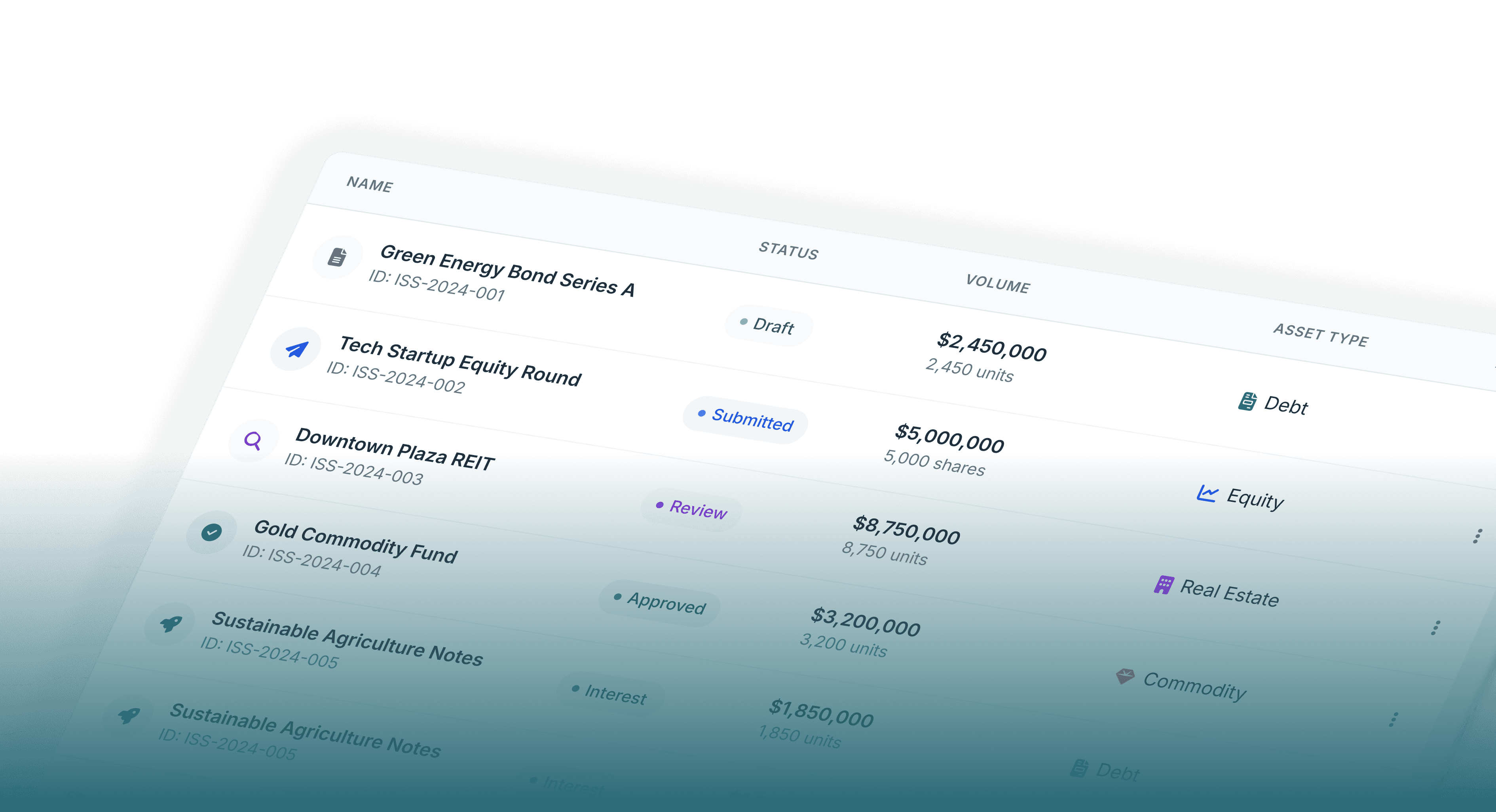
ONINO's partnership with Volksbank demonstrated this model in the German market: a regional bank offering its SME clients access to digital mezzanine financing through a branded platform, operating on regulated infrastructure provided by ONINO. For Sparkassen and cooperative banks with multiple regional entities, the white-label model also allows for consistent product delivery across the network without each entity independently building and maintaining the underlying infrastructure.
The Regulatory Framework Banks Need to Navigate
Banks entering digital securities distribution need to understand how this activity fits within their existing regulatory perimeter and where new authorizations may be required.
If the bank is acting purely as a distributor, referring clients to a separately authorized platform and earning a referral or distribution fee, the activity may fall within the bank's existing MiFID II authorization as investment advice or reception and transmission of orders, depending on how the referral is structured. Legal analysis of the specific referral arrangement is required before any client-facing activity begins.
If the bank operates its own branded platform, it is acting as a platform operator in addition to a distributor. This requires either the bank itself to hold the relevant authorization as a regulated crowdfunding service provider under the EU Crowdfunding Regulation or as an investment firm under MiFID II, or for the underlying platform provider to hold that authorization and the bank to operate under it as a tied agent or equivalent arrangement.
For instruments qualifying as electronic securities under the German eWpG, the registry obligations must also be addressed. The crypto securities register entry is a legal requirement for the instrument to be recognized as a security under German law, and it is typically handled by the platform infrastructure provider as part of the issuance process.
ONINO's infrastructure handles compliance, investor onboarding, and reporting from day one - so you can focus on structuring your deal and building your investor base. Platforms go live in under 24 hours, with no internal technical build required.
FAQ
What is Basel 3 and why is it important for banks?
Basel 3 is a set of international banking regulations developed by the Basel Committee on Banking Supervision following the 2008 financial crisis. Its core purpose is to strengthen bank capital adequacy by requiring banks to hold more and higher-quality capital against their risk-weighted assets. For European banks, the Basel 3.1 finalization represents the most significant capital framework change in over a decade, with implementation increasing capital requirements for many institutions, particularly those with large SME or real estate lending books.
Why do banks need digital transformation in their financing products?
Digital transformation in bank financing products is driven by two pressures. First, capital requirement increases under Basel 3 make it less efficient to hold certain loan types on the balance sheet, creating demand for originate-and-distribute models. Second, SME clients increasingly expect financing solutions that are faster, more flexible, and better structured than traditional senior bank loans alone can provide.
How will Basel 3 affect banks in the EU?
EU implementation of Basel 3.1 is increasing standardized risk weights for several asset classes, reducing the capital relief available from internal models, and introducing an output floor that limits how far internal model calculations can deviate from standardized approaches. The net effect for most EU banks is higher capital requirements against existing asset portfolios, which reduces lending capacity or increases the cost of capital for borrowers.
Can regional banks offer digital mezzanine financing without building their own platform?
Yes. A bank can operate a branded digital financing platform on white-label infrastructure provided by a licensed platform operator. In this model, the bank controls the client relationship and the distribution activity; the platform provider supplies the technology, regulatory authorization, and compliance infrastructure. The Volksbank-ONINO partnership is an example of this model in practice.
Summary
Basel 3.1 capital requirements are reducing the balance sheet efficiency of traditional SME lending, pushing banks toward originate-and-distribute models.
Mezzanine capital instruments distributed through digital platforms allow banks to serve SME clients without adding risk-weighted assets to their own books.
Regional banks and Sparkassen can operate branded digital financing platforms on white-label infrastructure, maintaining the client relationship while the platform provider handles technology and regulatory authorization.
The regulatory structure for bank-operated digital platforms depends on whether the bank acts as distributor, operator, or both, and requires legal analysis specific to the instrument type and jurisdiction.
For German-domiciled instruments, eWpG registry obligations are handled by the platform infrastructure provider as part of the issuance process.
Want to learn more how this can be applied to your business?
Read related Articles
How Basel 3 capital rules push regional banks toward digital financing platforms. Why Volksbanken & Sparkassen offer mezzanine capital without balance sheet exposure via tokenization.